CBD topicals have changed considerably over the past several years. What was once a relatively small category of low-potency lotions has expanded to include concentrated CBD creams, balms, salves, gels, and formulas combining multiple cannabinoids.
For consumers experiencing localized discomfort, this variety provides more options—but it can also make choosing a product more complicated.
People researching CBD topicals for areas affected by tingling, burning sensations, sensitivity, or other forms of nerve discomfort should look beyond the number printed on the front of the container. Potency matters, but formulation, additional cannabinoids, ingredients, lab testing, and product transparency can be equally important.

Why Topical CBD Appeals to Consumers
CBD can be consumed in several ways, including oils, capsules, gummies, and topical products.
Topicals are different because they’re applied directly to a particular area of the body. Rather than consuming a product orally, someone can massage a CBD cream or balm into areas such as the feet, hands, legs, knees, shoulders, or back.
That makes topical CBD particularly attractive to people looking for a localized addition to their wellness routine.
Research into CBD and different types of discomfort continues to develop, however, and consumers should be cautious of companies claiming that a topical CBD product can treat or cure neuropathy or another medical condition.
See also: The Future of Smoking Tech: How Electric Bongs Are Changing the Game
CBD Balm, Cream, or Gel?
Consumers searching for a CBD balm for nerve discomfort may encounter products labeled as balms, creams, salves, lotions, and gels.
The terminology can sometimes be confusing.
Balms and salves are generally thicker and often use an oil- or wax-based formulation. Creams typically have a lighter consistency and may absorb more quickly. Gels can provide an even lighter application and are frequently combined with cooling ingredients.
There isn’t necessarily one format that’s best for everyone.
Instead, consider how the product will actually be used. Someone applying CBD to their feet at night might prefer a different consistency from someone applying it to their hands several times throughout the day.
Pay Attention to CBD Concentration
CBD potency varies enormously between topical products.
Some contain only a few hundred milligrams of CBD in an entire container, while high-potency products can contain several thousand milligrams.
This is one area where consumers should read labels carefully.
Don’t evaluate potency based solely on a large number displayed on the package. Look at the size of the container and determine how much CBD the product actually contains.
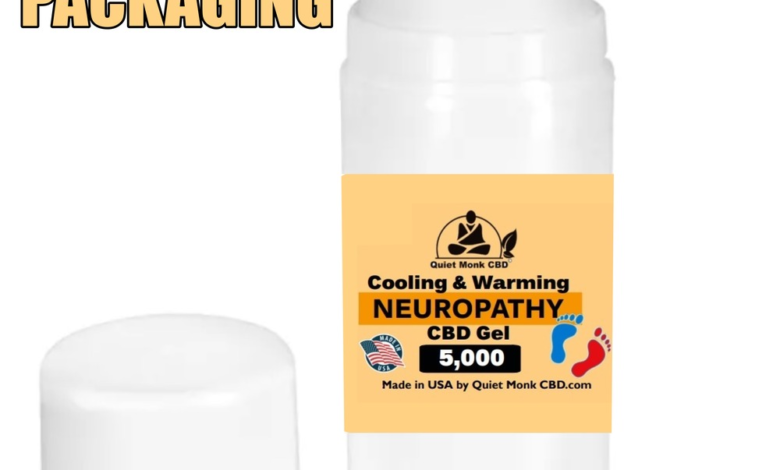
For example, 5,000 mg of CBD in a four-ounce container represents a very different concentration from the same amount spread across a much larger product.
More CBD isn’t automatically better for every person, either. Individual preferences vary, and people who haven’t previously used topical CBD may want to begin conservatively.
Consider Other Cannabinoids Such as CBG
Another development in the topical CBD market is the increased use of minor cannabinoids.
CBG, or cannabigerol, is one example.
Some manufacturers now combine CBD and CBG rather than relying exclusively on CBD. Research involving CBG is still developing, so consumers should be skeptical of claims suggesting that it has been conclusively proven to treat specific conditions.
Nevertheless, the growing availability of CBD + CBG formulations gives consumers another option when comparing cannabinoid profiles.
A transparent manufacturer should clearly state how much CBD and CBG are contained in the product rather than combining everything into an ambiguous “hemp extract” number.
Warming and Cooling Formulas Offer Different Experiences
The cannabinoids aren’t the only ingredients that matter in a topical.
Many CBD creams and balms contain ingredients designed to create an additional warming or cooling sensation.
Menthol is particularly common in cooling formulas. Other formulations may create warmth, while some products combine warming and cooling sensations.
This can provide immediate sensory feedback after application, which some consumers prefer.
However, people with sensitive skin should carefully examine the ingredient list. A patch test on a small area of skin can also be a sensible precaution when trying a new topical.
Third-Party Lab Testing Should Be Easy to Find
CBD products can look impressive online while revealing relatively little about what’s actually inside them.
That’s why independent laboratory testing remains an important consideration.
A Certificate of Analysis (COA) can help verify the cannabinoid profile of a product and provide additional information about its composition.
Consumers should look for companies that make current lab results reasonably easy to access.
Transparency is especially important with high-potency products. If a company advertises thousands of milligrams of CBD, consumers should have a way to verify that cannabinoid content beyond simply trusting the number on the label.
Look at the Complete Ingredient List
CBD concentration tends to receive most of the attention, but the base formulation can significantly affect the experience of using a topical.
Consider factors such as:
- How easily does the product spread?
- Does it absorb relatively quickly?
- Does it leave a heavy or greasy residue?
- Does it contain menthol or other strongly scented ingredients?
- Are all ingredients clearly disclosed?
These practical considerations become increasingly important for someone using a topical regularly.
A powerful formula isn’t particularly useful if the person dislikes its texture or smell enough that they rarely use it.
Avoid Miracle Claims
Perhaps the biggest warning sign when shopping for CBD products is exaggerated medical language.
Nerve pain and neuropathy can have many underlying causes, including diabetes, injuries, medication effects, vitamin deficiencies, and neurological conditions. Persistent or unexplained symptoms warrant evaluation by an appropriate healthcare professional.
CBD products shouldn’t be presented as substitutes for diagnosing or treating those underlying conditions.
Responsible CBD manufacturers can explain their formulations, cannabinoid concentrations, ingredients, and intended uses without promising a medical outcome.
That distinction is increasingly important as the CBD industry matures.
The Bottom Line
Choosing a CBD topical for localized nerve discomfort involves more than finding the product with the largest CBD number.
Consumers should consider cannabinoid concentration, container size, CBD and CBG content, warming or cooling ingredients, texture, independent laboratory testing, and the transparency of the company manufacturing the product.
Most importantly, expectations should remain realistic.
CBD creams and balms can be incorporated into a broader wellness and comfort routine, but they aren’t replacements for appropriate medical evaluation or treatment.
Consumers who approach CBD topicals with those expectations are in a much better position to compare products based on what actually matters: formulation, transparency, quality, and how well the product fits their individual needs.
This article is for informational purposes only and is not intended as medical advice. CBD products are not intended to diagnose, treat, cure, or prevent any disease. Anyone experiencing persistent, severe, or unexplained nerve symptoms should consult an appropriate healthcare professional.