The CBD topical market looks very different today than it did just a few years ago.
Early CBD lotions were often relatively simple products containing modest amounts of CBD in a standard skin cream. Today, consumers can choose from high-potency creams, CBD + CBG formulas, warming and cooling gels, salves, balms, and products developed for very specific types of topical use.
This evolution reflects a broader trend in the hemp industry: consumers are becoming more knowledgeable about cannabinoids and increasingly selective about the products they purchase.

Instead of simply asking whether a cream contains CBD, shoppers are looking at potency, cannabinoid combinations, additional ingredients, laboratory testing, texture, and how a particular formula fits into their wellness routine.
From General CBD Lotions to Specialized Topicals
CBD topicals were once marketed primarily as general-purpose wellness products.
That category has expanded considerably.
Consumers can now find products formulated for athletes, massage, post-workout routines, cooling applications, warming applications, dry skin, and localized areas of discomfort.
There are also products developed specifically for people interested in applying CBD to areas where they experience unusual sensations such as tingling, burning, or sensitivity.
The important distinction is that specialized formulation doesn’t mean a CBD product treats the underlying cause of those symptoms.
Nerve-related symptoms can have many causes and should be evaluated by an appropriate healthcare professional when they’re persistent, severe, or unexplained.
See also: Why CBD Smokers Are Packing Their Own Pre-Rolls
Formulation Can Matter as Much as CBD Potency
One of the easiest ways to compare CBD topicals is by looking at the number of milligrams printed on the package.
That’s useful information, but it doesn’t tell the entire story.
Consider two products containing the same amount of CBD. One might be a thick, oil-based balm, while another is a fast-absorbing cream containing menthol and other ingredients designed to produce warming or cooling sensations.
Those products can provide very different experiences despite containing the same amount of CBD.
Consumers should therefore evaluate the complete formulation rather than concentrating exclusively on potency.
Why Warming and Cooling Formulas Are Popular
One of the most noticeable trends in CBD topicals is the addition of ingredients that create warming or cooling sensations.
Menthol is frequently used in cooling formulas. Other formulations create warmth, while some products combine both sensations.
These ingredients provide an immediate sensory experience after application, which can complement the topical wellness routine for some users.
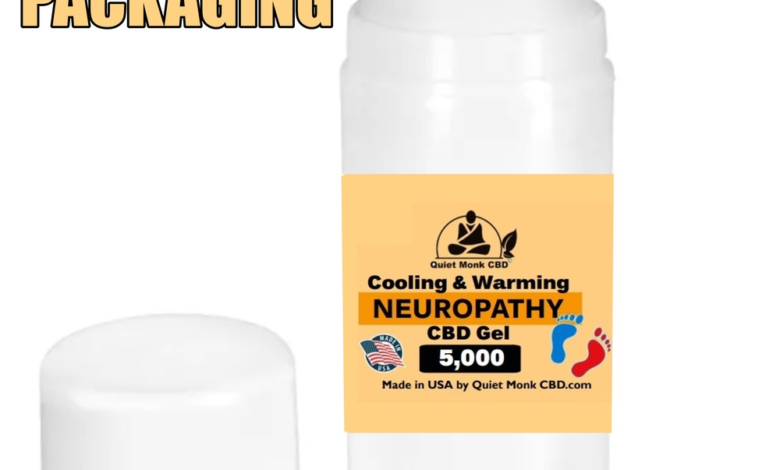
People interested in how these specialized formulations are being designed for areas affected by nerve discomfort can learn more here.
The key is understanding what the product is designed to do and maintaining realistic expectations about topical CBD.
CBD + CBG Is Another Growing Trend
CBD is also increasingly being combined with other hemp-derived cannabinoids.
One of the most notable is CBG, or cannabigerol.
CBG occurs naturally in cannabis and hemp plants and is sometimes described as a minor cannabinoid because mature plants generally contain much smaller quantities of it than CBD.
As extraction and formulation techniques have improved, CBG has become more widely available in commercial hemp products.
That has led to a growing number of CBD + CBG oils, gummies, creams, balms, and salves.
Research into CBG remains relatively limited, however. Consumers should be cautious about companies presenting emerging research as established medical evidence.
High-Potency CBD Is Becoming More Common
Another significant change has been the increasing potency of topical products.
A few hundred milligrams of CBD was once common for an entire jar of cream. Today, consumers can find topicals containing several thousand milligrams.
Experienced CBD consumers are partly responsible for this shift. As people become more familiar with cannabinoids, some begin looking for more concentrated formulations.
However, higher potency doesn’t automatically mean better.
Consumers should consider container size along with total CBD content. Five thousand milligrams of CBD in a four-ounce container represents a different concentration from the same amount in an eight-ounce product.
Clear labeling helps shoppers understand these differences.
Texture and Absorption Shouldn’t Be Overlooked
The experience of using a CBD topical matters, particularly for someone applying it regularly.
A product can have an impressive cannabinoid profile but still be inconvenient if it is excessively greasy, difficult to spread, or slow to absorb.
Creams tend to have a lighter consistency than traditional balms and salves. Balms often contain more oils, waxes, or butters and can remain on the skin longer.
Neither approach is inherently better.
Someone applying CBD before bed may prefer a heavier balm, while someone applying a topical to their hands or feet during the day might prefer a faster-absorbing cream.
Personal preference plays an important role.
Laboratory Testing Remains Essential
As CBD products become more sophisticated and potent, independent testing becomes even more important.
Consumers should look for a Certificate of Analysis, commonly called a COA, from an independent laboratory.
These reports can help verify the cannabinoid profile and provide consumers with more information about what’s actually inside a product.
If a company advertises thousands of milligrams of CBD or a specific combination of CBD and CBG, consumers should have a reasonable way to verify those claims.
Transparency should be expected rather than considered an added bonus.
Specialized Doesn’t Mean Medical
There’s an important distinction between developing a product for a particular type of consumer and claiming that the product treats a medical condition.
A CBD company might formulate a topical with high concentrations of cannabinoids and warming or cooling ingredients for people interested in localized comfort.
That’s different from claiming that the product treats neuropathy, arthritis, or another medical condition.
Consumers should be skeptical of guaranteed outcomes and miracle claims.
Persistent pain, numbness, burning, tingling, or other unusual sensations can have underlying medical causes. CBD shouldn’t be used as a substitute for obtaining an appropriate diagnosis or following professional medical advice.
The Future of CBD Topicals
The CBD topical category will likely continue moving toward specialization.
Rather than producing one generic CBD lotion, manufacturers are increasingly experimenting with different cannabinoid concentrations, CBD + CBG combinations, warming and cooling ingredients, textures, and application methods.
That’s ultimately good for consumers because it creates more choices.
It also makes reading labels and researching products increasingly important.
Instead of asking only, “How much CBD does this contain?” consumers should consider the entire formulation: cannabinoid concentrations, ingredients, texture, laboratory testing, intended use, and the transparency of the manufacturer.
Those factors provide a much better picture of a CBD topical than the milligram number printed on the front of the container.