
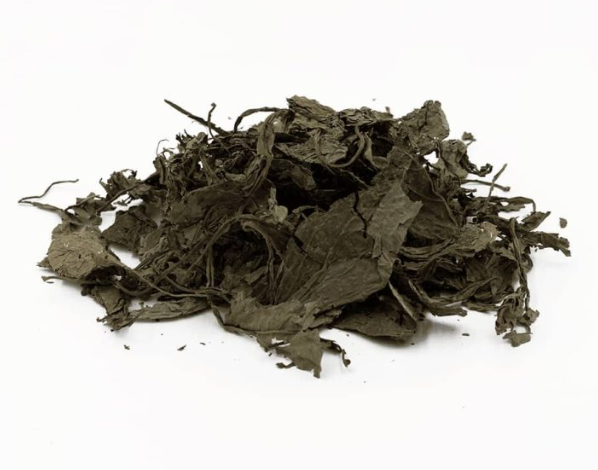
For someone encountering Salvia divinorum for the first time, an online plant listing can raise more questions than it answers.
Is that broad leaf shape normal? Should the stem be round or square? Is a pale-green plant unhealthy? How large should the leaves be? And how can you tell the difference between a young cutting, an established plant, and something that has simply been labeled “Salvia” without enough information?
These are useful questions because Salvia divinorum is still unfamiliar to many plant enthusiasts. It belongs to the same large genus as hundreds of ornamental and culinary sages, yet it has its own recognizable growth characteristics.

A healthy plant cannot be judged from one feature alone. Instead, it helps to look at the whole picture: botanical identity, leaves, stems, new growth, overall structure, environmental conditions, and the quality of information accompanying the plant.
This guide explains what to look for without assuming you already know the species.
Start With the Correct Species
Before deciding whether a plant looks healthy, first establish whether the listing clearly identifies it as Salvia divinorum.
The full botanical name matters.
Salvia is a huge genus within the mint family, Lamiaceae. It includes culinary sage, ornamental salvias, shrubs, annuals, perennials, and many plants that look nothing like S. divinorum.
A listing labeled only:
“Salvia plant”
does not tell you enough.
A better listing should state Salvia divinorum clearly and ideally provide photographs of the actual plant or representative stock.
This distinction is especially important for newcomers because several unrelated Salvia species can have broad green leaves and square stems. No single photograph should be treated as absolute proof of identity.
Botanical identification works best when several characteristics agree.
What Does Salvia Divinorum Look Like?
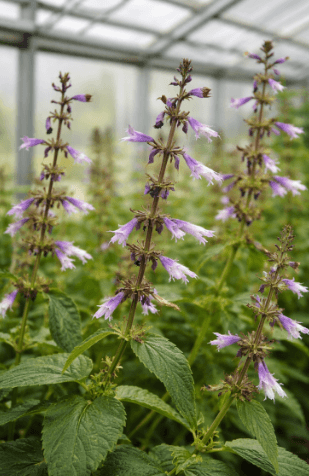
At first glance, Salvia divinorum looks more like a lush foliage plant than the smaller, woody culinary sage many gardeners know.
It is a perennial herb.
Mature specimens can grow well over a meter tall under favorable conditions, although plants kept in containers or grown under different light levels can remain much smaller.
The plant typically develops:
- broad green leaves;
- opposite leaf arrangement;
- prominent leaf veins;
- irregularly toothed or crenate margins;
- green quadrangular stems;
- noticeable nodes;
- and relatively soft, herbaceous growth.
Botanical descriptions from Mexico record plants roughly 0.5–1.5 meters tall, with opposite elliptic-to-ovate leaves commonly 10–25 cm long and sometimes larger.
That gives you a useful reference point, but it should not become a rigid checklist.
A young plant with 8 cm leaves is not automatically unhealthy simply because mature specimens can produce much larger foliage.
Age and growing conditions matter.
Understanding the Leaves
Leaves are usually the first thing people notice.
A typical Salvia divinorum leaf is broad rather than needle-like or deeply divided. Depending on the plant and its growing conditions, the outline may appear elliptic, oval, or somewhat egg-shaped.
The margins are usually not perfectly smooth.
Instead, they commonly have shallow irregular teeth or rounded crenations.
The leaves appear in opposite pairs along the stem, meaning one leaf develops across from another at a node.
That opposite arrangement is a useful characteristic because it reflects the plant’s membership in the mint family.
What does a healthy leaf look like?
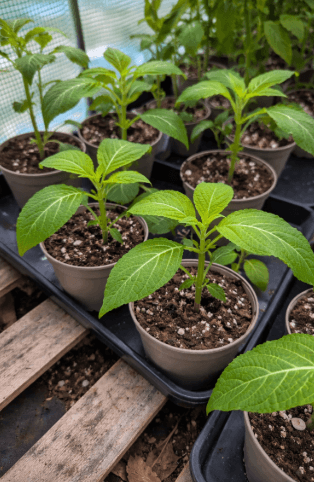
There is no single shade of green that proves health.
Instead, look for:
- reasonable firmness;
- intact leaf tissue;
- clear venation;
- active growth near the top of the plant;
- no extensive dead margins;
- no widespread spotting;
- and no obvious heavy pest damage.
A healthy leaf does not have to be cosmetically perfect.
Plants are living organisms, not manufactured products.
One torn edge or older leaf with minor discoloration tells you much less than the overall condition of the plant.
Why Leaf Color Can Vary
One mistake beginners often make is assuming that every healthy Salvia divinorum plant should be exactly the same dark green.
Plants respond to their environment.
Leaf color and appearance can change with:
- light intensity;
- nutrient availability;
- root condition;
- temperature;
- humidity;
- watering;
- plant age;
- and recent transport stress.
A plant grown under softer light may look different from one exposed to brighter conditions.
Likewise, new leaves can differ in color from mature leaves.
This is why I would never judge an online plant from color alone.
What matters more is whether the color looks reasonably consistent with the rest of the plant and whether the growing tips appear active.
A completely pale plant with declining growth deserves more investigation than a healthy-looking plant whose leaves simply appear lighter green in a photograph.
What Healthy Stems Should Look Like
The stem provides another useful clue.
Like many members of the mint family, Salvia divinorum has a distinctly quadrangular or square stem rather than a perfectly cylindrical one.
Established stems can become fairly substantial while remaining herbaceous.
Botanical descriptions also note that the stems can be hollow.
When evaluating a plant photograph, look for stems that appear capable of supporting active growth rather than tissue that looks extensively collapsed, blackened, or decayed.
A normal stem may show:
- slight changes in color with age;
- visible nodes;
- minor scarring where leaves were removed;
- branching;
- and variation in thickness between new and older growth.
None of those features automatically indicates poor health.
Why the Square Stem Matters
The square stem is useful because it is part of a broader botanical pattern.
Members of the Lamiaceae commonly have quadrangular stems, opposite leaves, and characteristic flower structures.
That means a square stem supports identification, but does not prove it.
Basil and many mints also have square stems.
So the correct approach is:
square stem + opposite broad leaves + appropriate leaf margins + overall morphology + reliable provenance
rather than:
square stem = definitely Salvia divinorum.
This kind of multi-feature identification is much more useful for someone learning the plant for the first time.
Nodes and New Growth
Look closely at where the leaves meet the stem.
These points are called nodes.
Nodes matter because they are active structural points on the plant. Leaves and branches develop around them, and vegetative growth can emerge from axillary buds near these areas.
When assessing an established plant, I pay more attention to the condition of the growing points than to whether every older leaf looks flawless.
Healthy active tips suggest that the plant is continuing to develop.
You may see:
- a central growing tip;
- small emerging leaf pairs;
- developing side shoots;
- or fresh growth near upper nodes.
A plant with several older imperfect leaves but healthy new growth may simply be recovering from previous stress.
That is very different from a plant whose entire growing tip is deteriorating.
Compact vs Stretched Growth
Two healthy Salvia divinorum plants can have surprisingly different proportions.
One may look compact, with relatively short distances between leaf pairs.
Another may have longer stretches of stem between nodes.
Those stretches are called internodes.
Long internodes can result from environmental conditions, especially differences in light.
This does not automatically make the plant unhealthy.
However, an extremely stretched plant with weak stems and sparse foliage may suggest that its previous growing conditions were not ideal.
By contrast, a plant with balanced stem thickness, multiple healthy leaves, and active growth usually gives you more confidence regardless of whether it is perfectly compact.
The key is to evaluate proportions rather than expecting every specimen to have the same shape.
Healthy Plant or Recently Stressed Plant?
This distinction is especially important when buying living plants online.
A healthy plant can temporarily look unhappy after:
- being packed;
- spending time in darkness;
- experiencing temperature changes;
- losing humidity;
- being transported;
- or moving into a new environment.
Leaves may droop.
A lower leaf may yellow.
The plant may briefly stop producing visible new growth.
Those symptoms do not necessarily mean the plant was unhealthy when shipped.
This is why photographs taken before shipment, clear seller descriptions, and realistic expectations are useful.
There is a difference between temporary environmental stress and progressive plant decline.
Temporary stress usually affects appearance while the basic stems, nodes, and growing tissues remain viable.
Progressive decline continues worsening rather than stabilizing.
What Yellow Leaves Can Tell You
Yellow leaves are another feature that people often interpret too quickly.
One yellow lower leaf on an otherwise vigorous plant is not the same as widespread yellowing across every leaf.
Older leaves naturally age.
Plants can also shed foliage after environmental changes.
More concerning patterns include:
- several leaves yellowing simultaneously;
- yellowing combined with soft or darkened stems;
- continuing loss of new growth;
- widespread tissue collapse;
- or symptoms that become progressively worse.
Even then, yellowing is a symptom rather than a diagnosis.
The photograph alone may not tell you whether the cause involves roots, moisture, nutrition, temperature, or another environmental factor.
That is why a reputable listing should describe the plant rather than making unrealistic promises about its future appearance.
What Leaf Damage Is Worth Investigating
Minor physical damage happens easily with large, soft leaves.
A small tear may result from handling.
A browned edge may reflect an older environmental event.
What deserves more attention is a repeated pattern.
For example:
Fine stippling across many leaves can justify checking for sap-feeding pests.
Sticky residue or visible insects deserves closer inspection.
Large spreading dark lesions should not simply be dismissed as shipping damage.
Extensive edge death across most foliage suggests that the plant has been under significant stress.
Distorted new growth is usually more informative than damage restricted to one old leaf.
When comparing photographs, therefore, look at the newest growth first.
It often tells you more about the plant’s current direction than the oldest leaf on the stem.
Young Cutting vs Established Plant
This is one of the most important distinctions in online listings.
A cutting and an established plant may ultimately belong to the same species and even the same genetic lineage, but they are not equivalent products.
A cutting represents material used to establish a new plant.
An established plant has progressed farther and developed a more independent structure.
Someone searching for salvia divinorum plants for sale should therefore check whether the listing clearly identifies the development stage instead of assuming every photograph represents a mature specimen.
Useful descriptions may specify whether the offering is:
- a fresh cutting;
- a rooted cutting;
- a starter plant;
- or a larger established plant.
This is more than terminology.
It affects what the buyer should realistically expect to receive.
Why Environment Changes the Plant’s Appearance
One of the most useful lessons for new growers is that genetics do not determine appearance by themselves.
Environment shapes the plant you see.
Two genetically identical specimens grown in different conditions can develop:
- different leaf sizes;
- different internode lengths;
- different shades of green;
- different branching patterns;
- and noticeably different overall shapes.
Botanists describe this interaction through the distinction between genotype and phenotype.
The genotype is the genetic foundation.
The phenotype is what you actually observe after genetics interact with the environment.
That is why comparing a seller’s plant to one photograph from the internet can be misleading.
A reliable identification depends on stable botanical characteristics, while a health assessment also considers growing conditions.
What Good Listing Photos Should Show
If you are evaluating a living plant online, useful photographs should do more than make the product look attractive.
Ideally, you should be able to see:
The overall plant
This helps you understand its structure and approximate stage of development.
Leaves
Close enough to judge general shape, margins, venation, and condition.
Stems and nodes
Especially useful for distinguishing a plant from a handful of loose foliage.
Growing tip
Fresh upper growth provides helpful information about current condition.
Container or root status, when relevant
If the listing describes a rooted plant, the presentation should make that claim understandable.
A seller may use representative photos because living inventory changes constantly. That is reasonable as long as the description makes clear what the buyer will actually receive.
What I would avoid is a listing that uses one generic stock photograph while providing almost no information about size, development stage, or plant form.
Why Provenance and Plant Identity Matter
Appearance alone has limits.
Scientific work on Salvia divinorum has examined detailed leaf, petiole, stem, and microscopic characteristics because accurate plant identification can require more than a casual photograph.
For ordinary collectors, laboratory examination is obviously unrealistic.
That makes provenance more important.
Provenance means understanding where the plant material came from and how its identity has been maintained.
A well-documented parent plant and consistent botanical labeling provide more confidence than an anonymous cutting that has changed hands repeatedly without records.
This is particularly relevant to plants maintained extensively through vegetative propagation.
A label preserves information.
Without it, a perfectly healthy plant can eventually become botanically uncertain.
A Practical Checklist for Comparing Plants
If you are looking at several Salvia divinorum listings, use this quick checklist.
1. Does the listing use the full botanical name?
Look for Salvia divinorum, not simply “Salvia.”
2. Are you buying a cutting or an established plant?
The development stage should be obvious.
3. Do the leaves fit the expected general morphology?
Broad, opposite leaves with an elliptic-to-ovate outline and irregularly toothed or crenate margins are consistent with published descriptions.
4. Can you see the stem?
A quadrangular green stem supports identification.
5. Is there active new growth?
Growing tips and developing leaf pairs are useful signs.
6. Is damage isolated or widespread?
One imperfect leaf matters less than deterioration affecting most of the plant.
7. Does the seller explain approximate size or stage?
Photographs alone can distort scale.
8. Are representative photographs clearly identified as such?
There should be no confusion about whether you receive the exact photographed plant.
9. Is there useful provenance or parent-plant information?
This adds value for a clonally maintained species.
10. Have you checked your local rules?
Legal treatment of Salvia divinorum varies by jurisdiction, so verify current requirements where the plant would be received.
Frequently Asked Questions
What shape are Salvia divinorum leaves?
They are generally broad, elliptic to ovate, with irregularly toothed or crenate margins. Mature leaves can become quite large under favorable conditions.
Does Salvia divinorum have square stems?
Yes. Quadrangular stems are one of its characteristic features and are consistent with its place in the mint family.
Are lighter-green leaves automatically unhealthy?
No. Color varies with environment, leaf age, nutrition, light, and other factors. Look at the whole plant rather than judging one shade of green.
How can I tell whether a plant is healthy from a photograph?
You cannot diagnose everything from a photo, but you can look for intact stems, active growing tips, reasonably firm foliage, limited rather than widespread damage, and an overall structure consistent with continued growth.
Is a cutting the same as a Salvia divinorum plant?
A cutting is propagation material that can develop into an independent plant. An established plant has progressed farther in root and shoot development.
Can two plants from the same clone look different?
Yes. Genetically similar plants can develop noticeably different appearances when grown under different environmental conditions.
Can appearance alone prove that a plant is Salvia divinorum?
Not with complete certainty. Morphology is useful, but reliable provenance, correct labeling, and multiple matching botanical characteristics provide much stronger confidence.
Final Thoughts
Learning to recognize Salvia divinorum becomes much easier once you stop searching for one perfect identifying feature.
The plant tells its story through a combination of traits.
Broad opposite leaves give you one clue.
Quadrangular stems give you another.
Nodes, leaf margins, growth habit, and overall structure add more context.
Then health becomes a separate question.
A healthy plant does not have to look cosmetically perfect. Older leaves age, environmental changes leave marks, and living plants respond visibly to how they are grown.
What matters is the pattern.
Look for viable stems, active growing points, reasonable foliage condition, clear botanical labeling, and a seller who explains whether the offering is a cutting, starter plant, or established specimen.
For people discovering Salvia divinorum for the first time, this botanical approach is far more useful than starting with hype or assumptions.
Understand the plant first.
Once you know what a normal Salvia divinorum plant looks like and why specimens can vary, online listings become much easier to evaluate—and the species itself becomes much more interesting.